
From Birth to Weaning: Supporting Gut Microbial Stab...

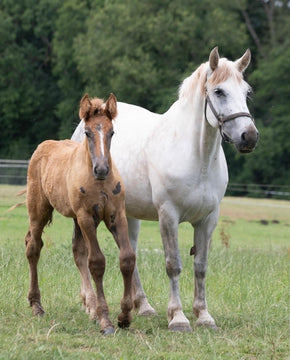
From Birth to Weaning: Supporting Gut Microbial Stability in Thoroughbred Foals Alongside a massive increase in human microbiome research, interest...
From Birth to Weaning: Supporting Gut Microbial Stability in Thoroughbred Foals Alongside a massive increase in human microbiome research, interest in the equine microbiome has accelerated in recent years. What was once a research niche is now increasingly relevant to practical stud management. A growing body of evidence suggests that early gut microbial development may be associated with long-term health and athletic outcomes in Thoroughbreds. While this research does not justify radical intervention, it does support thoughtful, stability-focused management during...
Read more

Senior Horse Joint Health

A Practical, Evidence-Led Guide to Supporting Ageing Joints

Joint stiffness is rarely dramatic at first.

It tends to show up quietly.

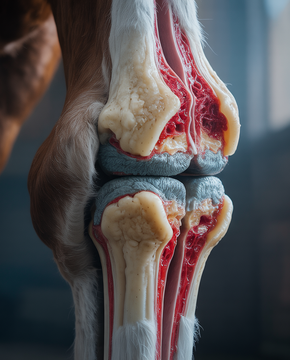
Senior Horse Joint Health A Practical, Evidence-Led Guide to Supporting Ageing Joints Joint stiffness is rarely dramatic at first. It tends to show up quietly. A slightly longer warm-up.A moment of hesitation stepping downhill.A little less push from behind. For many horses over 15, some degree of joint change is not unusual. Degenerative joint disease (osteoarthritis) becomes increasingly common with age, involving gradual cartilage wear, low-grade inflammation of the joint lining, and adaptive changes to the underlying bone. The question...
Read more

Breathe Easy This Winter – Even If Your Horse Is Stu...

Now, onto the big winter dilemma. If your horse is on a livery yard – or even at home –...
Now, onto the big winter dilemma. If your horse is on a livery yard – or even at home – you’re probably no stranger to turnout debates at this time of year. I see it from both sides. We all know horses are happiest and healthiest with plenty of time outdoors, but yard owners are understandably trying to protect paddocks from becoming complete mud baths. (Looking at what was once my own field, I can’t really blame them… it’s been...
Read more

Understanding Mud Fever in Horses

Understanding Mud Fever in Horses A Common Winter Woe: It’s a dreary winter morning; you bring your horse in from...
Understanding Mud Fever in Horses A Common Winter Woe: It’s a dreary winter morning; you bring your horse in from the paddock and notice scabs on his hind legs. This scenario is all too familiar to many horse owners. Mud fever (also known as pastern dermatitis or “greasy heel”) is a common skin infection in wet weather that can cause pain and discomfort. The good news is that with some knowledge and consistent care, you can prevent mud fever and...
Read more

Understanding Equine Sarcoids: A Guide for Horse Owners

  Understanding Equine Sarcoids: A Guide for Horse Owners 1.0 What is an Equine Sarcoid? An Introduction for Owners An...
  Understanding Equine Sarcoids: A Guide for Horse Owners 1.0 What is an Equine Sarcoid? An Introduction for Owners An equine sarcoid is the most common type of skin tumor found in horses. While the word "tumor" can be alarming, it's strategically important to understand what a sarcoid is—and what it is not. Sarcoids are not internally metastatic, meaning they will not spread to your horse's lungs, liver, or other organs. However, they are known to be "locally aggressive," capable...
Read more

Rethinking Joint Support for Horses: 4 Surprising Tr...

Every horse owner knows the feeling. You watch your horse move, and you notice a subtle change—a little less spring in his step, a slight stiffness after a ride, or a hesitation to fully flex a joint.

Introduction: The Search for a Solution to Equine Stiffness Every horse owner knows the feeling. You watch your horse move, and you notice a subtle change—a little less spring in his step, a slight stiffness after a ride, or a hesitation to fully flex a joint. Especially as our equine partners age, these signs become more common. In fact, studies estimate that over 50% of horses older than 15 have some degree of osteoarthritis, a degenerative disease involving cartilage wear,...
Read more

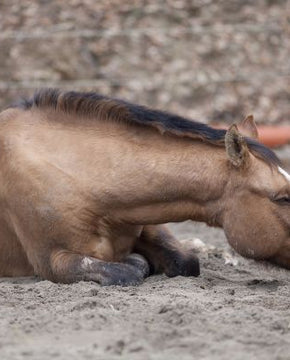
Are some horses more prone to colic than others?

Are some horses more prone to colic than others? There are several factors which contribute to increased risk that you should be aware of.

Significant weather changes usually mean quick changes to the way we manage our horses, for example in bad weather going from grazing 24/7 to stabled, at least at night. It also heralds a seasonal [spring & autumn] rise in colic cases, but why? This month's topic is Colic, is it really that important?

Are some horses more prone to colic than others? There are several factors which contribute to increased risk that you should be aware of. Significant weather changes usually mean quick changes to the way we manage our horses, for example in bad weather going from grazing 24/7 to stabled, at least at night. It also heralds a seasonal [spring & autumn] rise in colic cases, but why? This month's topic is Colic, is it really that important? If you’ve had...
Read more

Don't poison your horse!

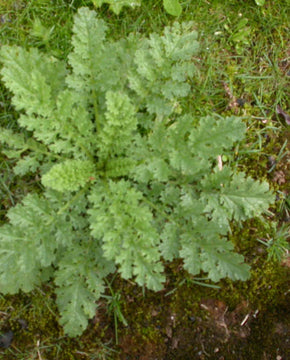
Ragwort Poisoning This weed is covered by the 1959 Weeds Act, amended by the Ragwort Control Act 2003 which means...
Ragwort Poisoning This weed is covered by the 1959 Weeds Act, amended by the Ragwort Control Act 2003 which means you may be issued with an ORDER to control the weed on your property. Obviously as it is toxic to your horse, it makes sense to keep the risk to a minimum by keeping it under control. Each ragwort plant can produce up to 120,000 seeds so it makes sense to deal with them before they seed. The picture shows...
Read more

Is your horse dying to be turned out?

There is a seasonal spike in colic caused by the significant change in diet from a mainly hay/haylage diet to...
There is a seasonal spike in colic caused by the significant change in diet from a mainly hay/haylage diet to grass. Help your horse by making the change slowly – ideally over at least a week or so, gradually increasing the time spent at grass. If you are working or have other commitments and can’t just pop back to bring them in, start the process in the evenings working the length of time up so you can get close to your target at the weekend...
Read more